
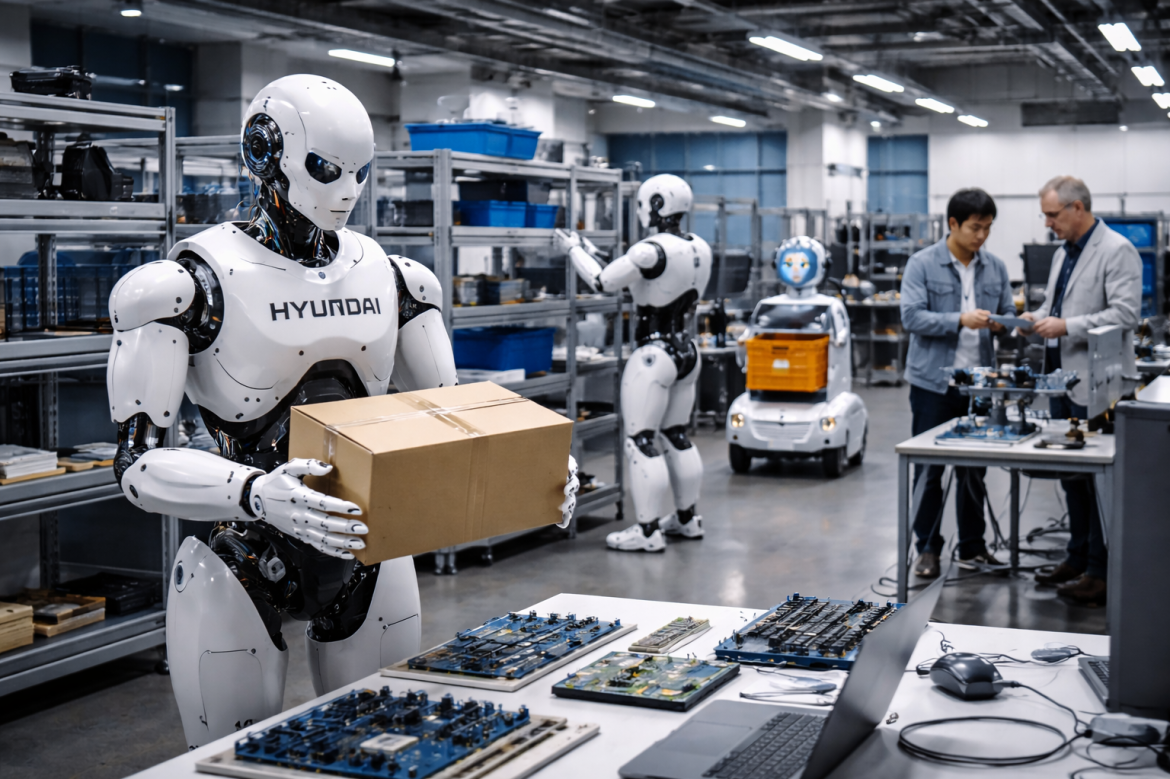
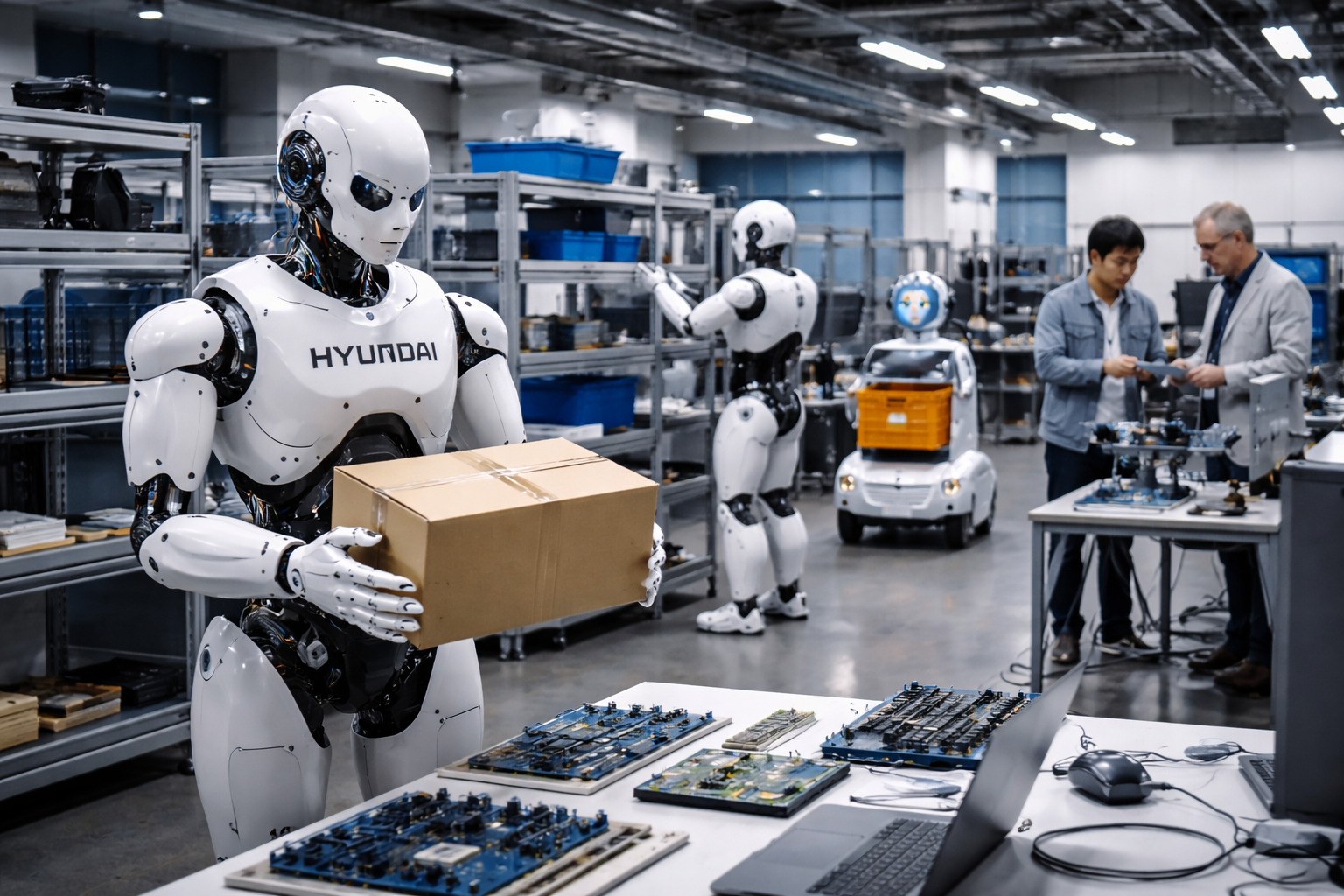
South Korean AI chipmaker DEEPX said it will strengthen its partnership with Hyundai Motor Group to develop a computing platform for generative AI robots and vehicles, as the company pushes deeper into low-power, on-device artificial intelligence.
The move builds on an existing relationship between the two companies and underscores a broader industry shift towards running advanced AI models directly on machines, rather than relying on constant cloud connectivity.
The tie-up is aimed at bringing generative AI closer to the edge.
That matters for robotics and mobility applications, where speed, energy efficiency and reliability are critical.
By using specialised chips designed to process AI workloads locally, DEEPX and Hyundai are seeking to reduce latency, improve responsiveness and lower power consumption in systems that need to operate continuously in real-world settings.
Partnership targets on-device generative AI
DEEPX said the partnership will centre on a computing platform for generative AI robots built on the company’s latest low-power chips.
The broader ambition is to support machines that can understand their surroundings, make decisions and interact more naturally, while operating without a heavy dependence on internet connectivity.
That positioning is increasingly important as robotics moves beyond narrow industrial tasks into delivery, logistics and humanoid applications.
Hyundai has been building out its robotics capabilities, and DEEPX’s processors are designed to fit neatly into that strategy by enabling more intelligence at the device level.
The companies are effectively betting that future robots will need powerful AI performance, but in a compact and energy-efficient form.
The partnership also highlights the growing importance of so-called on-device AI, which allows data processing to happen directly on a robot or vehicle.
For customers, that can offer advantages in privacy, reliability and cost, especially in environments where network access is patchy or response times must be near-instant.
Also read: Novo Nordisk taps OpenAI to boost AI in drug development
Chip roadmap and manufacturing plans
DEEPX said its next-generation chips are designed for low power consumption while supporting more advanced AI functions.
The company is working towards commercialising a broader product roadmap, including higher-performance computing platforms for generative AI workloads in robotics and automotive settings.
The company has also outlined plans for future manufacturing using advanced semiconductor processes.
That points to an effort to move beyond the startup phase and towards scale production, a crucial step for any chip designer trying to compete in a market dominated by larger global rivals.
In practical terms, the next phase will be about proving that DEEPX can convert technical promise into volume shipments and real customer deployments.
The appeal of the company’s pitch is straightforward: bring more AI computing on to the device itself, cut energy use and avoid the thermal and power constraints that have limited some earlier edge AI systems.
If DEEPX can deliver on those claims, it would give Hyundai and other partners a clearer pathway to deploy more capable robots and smarter mobility products.
Funding round and IPO path
DEEPX is also exploring ways to fund its next stage of growth.
The company has been linked to plans for a substantial fundraising round and is weighing a Korean IPO, with the possibility of a later US listing through depositary receipts.
That would fit the path taken by many high-growth technology groups seeking domestic visibility first before broadening access to global investors.
Any listing plan will depend on how quickly the company can translate partnerships into revenue and demonstrate demand for its chips.
Investors will be watching for signs of firm orders, customer wins and evidence that DEEPX’s technology can scale in a commercially viable way.
Hyundai’s robotics timeline
For Hyundai, the partnership forms part of a wider effort to build a robotics ecosystem that stretches across hardware, software and on-device computing.
The company has already signalled plans to expand production of humanoid and service robots later in the decade, and DEEPX’s chips could become a core building block in that push.
The significance of the partnership is not just technical.
It also reflects a strategic effort by South Korean companies to build a domestic AI hardware stack at a time when demand for specialised chips is rising sharply across industries.
The next milestones are likely to be clearer details on commercial deployment, manufacturing timelines and fundraising.
Investors and industry watchers will also be looking for evidence that the DEEPX-Hyundai alliance can move from pilot-stage collaboration to a broader platform strategy spanning robots, vehicles and other edge AI applications.
If the companies execute well, the partnership could become a notable test case for how low-power chips enable generative AI beyond the data centre.
In that sense, the story is bigger than one corporate tie-up: it is about whether specialised semiconductor firms can carve out a durable place in the fast-expanding market for real-world AI.
The post How DEEPX chips could change Hyundai’s push into AI robotics appeared first on Invezz