
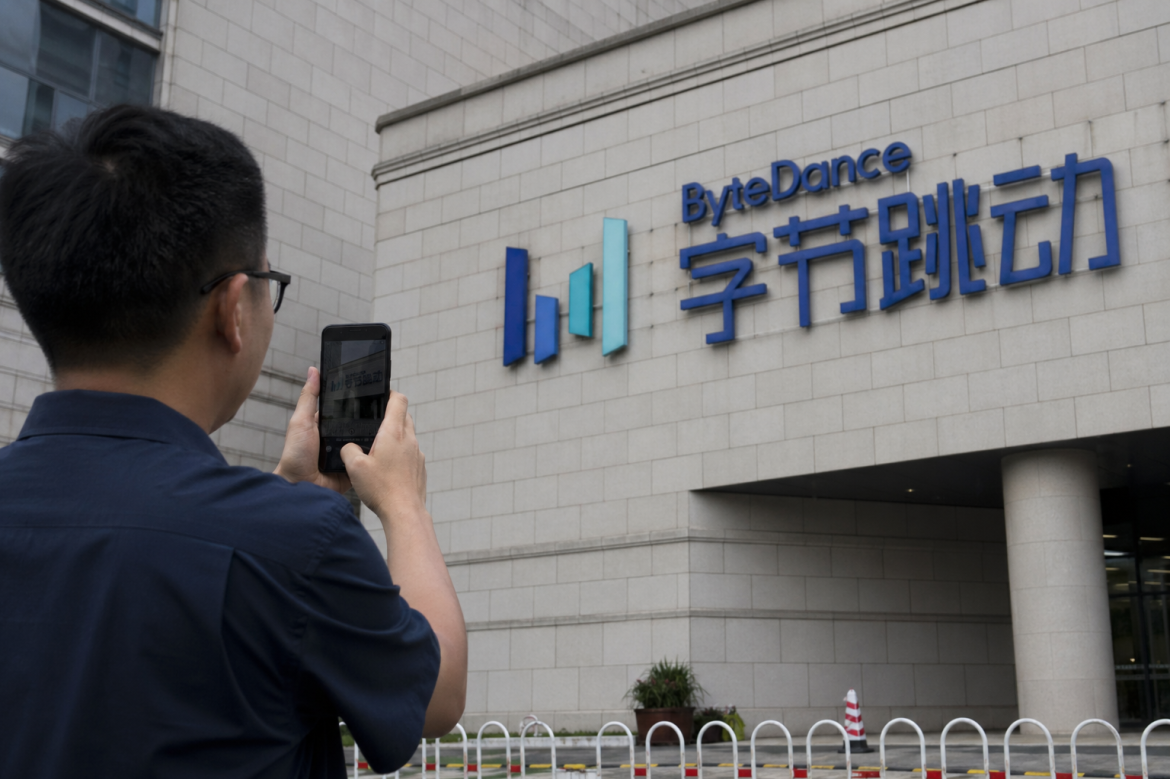
China flags ByteDance platforms over AI content labelling violations
China’s top internet regulator has directed video editing applications owned by ByteDance to comply with rules requiring clear labelling of AI-generated content, according to a statement issued on Tuesday.
The Cyberspace Administration of China said that ByteDance’s apps Jianying and Maoxiang, along with its website Jimeng AI, failed to adequately implement required AI content identification measures.
What is ByteDance?
ByteDance is a global technology firm known for developing content-sharing, video-editing, and AI-powered applications.
Its portfolio includes widely used platforms such as TikTok, Douyin, and CapCut, alongside lifestyle and entertainment apps like Lemon8, Resso, and Xigua Video.
The company also operates information and productivity platforms, including Toutiao and Lark, as well as emerging AI-driven tools such as Doubao, Cici, and Dreamina.
ByteDance’s applications are primarily mobile-focused and rely heavily on artificial intelligence to deliver personalised content recommendations, reaching hundreds of millions of users globally.
Platforms found in violation of cybersecurity rules
The regulator stated that the three platforms had violated China’s cybersecurity law and related regulations by not properly enforcing AI content labelling requirements.
The statement noted that authorities had summoned the companies involved and ordered them to rectify the issues.
Regulators also issued warnings and imposed penalties on those responsible, although no further details on the penalties were disclosed.
The watchdog emphasised that platforms must strictly adhere to legal requirements governing AI-generated content.
It added that enforcement actions would continue as part of broader efforts to ensure compliance.
Push for stricter oversight of AI content
The Cyberspace Administration of China said it would continue to strengthen oversight to “concretely protect the public interest and support the healthy and orderly development of AI,” as cited in a Reuters report.
The move reflects growing regulatory scrutiny over the use of artificial intelligence tools and the dissemination of synthetic content across digital platforms.
Authorities are increasingly focusing on ensuring that users can clearly identify AI-generated material.
New rules on AI content labelling
China introduced formal requirements for labelling AI-generated content in March 2025.
These rules came into effect in September the same year, establishing a framework for how platforms must disclose the use of artificial intelligence in content creation.
Under these rules, platforms are required to implement mechanisms that clearly mark AI-generated material, ensuring transparency for users and reducing the risk of misinformation.
Enforcement signals tighter compliance expectations
The regulator’s action against ByteDance’s platforms signals a stricter approach toward enforcement of AI-related regulations.
Authorities are likely to continue monitoring compliance across digital platforms and take action where necessary.
The statement reinforces China’s broader regulatory stance aimed at balancing technological development with safeguards for public interest.
By mandating clearer labelling of AI-generated content, regulators are seeking to improve transparency while maintaining tighter control over rapidly evolving digital ecosystems.
The latest directive underscores the importance of compliance for technology companies operating in China, particularly as AI tools become more widely integrated into consumer-facing platforms.
The post China flags ByteDance platforms over AI content labelling violations appeared first on Invezz