

Geopolitical risks reached a fever pitch on Monday after the US President Donald Trump said Iran ceasefire is “on life-support” as he rejected Tehran’s counter proposal for a peace treaty.
With the Strait of Hormuz remaining a volatile flashpoint and energy prices threatening to squeeze corporate margins, the macro environment appears fraught with peril.
However, Wall Street’s elite remains “remarkably undeterred”.
While the drumbeat of war grows louder, the siren song of the artificial intelligence revolution is proving more resonant for investors.
Why Dan Ives sees the Nasdaq hitting 30,000
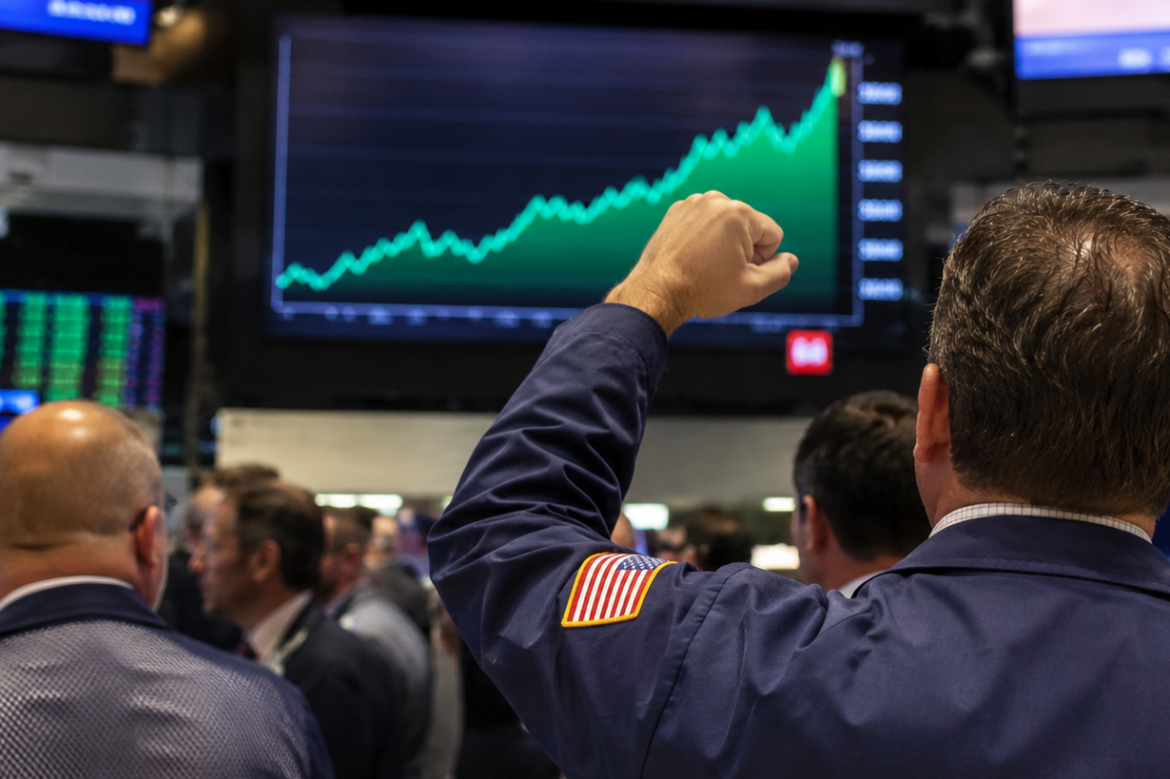
Wedbush Securities’ senior analyst Dan Ives is leading the bullish charge, boldly predicting the Nasdaq Composite will scale the 30,000-point mountain within the next year.
While the index already sits at 26,347 – a 13% gain year-to-date – Ives contends the market is only in the “early days” of a transformative era.
Speaking with CNBC, he characterized the current AI environment as a “memory super-cycle” – fueled by a 10-to-1 demand-to-supply ratio for high-performance chips.
Ives dismisses critics like Michael Burry, who recently likened the AI fervour to the 1999 dot-com bubble.
For him, the validation lies in cold, hard cash flowing into derivative plays across software, cybersecurity, and power infrastructure.
“The haters will hate,” Ives noted, but the fundamental “buildout” suggests this rally has another two years of runway.
Why Ed Yardeni expects S&P 500 to hit 8,250 this year
Ed Yardeni, president of Yardeni Research, has similarly adjusted his stance, hiking his year-end target for the benchmark S&P 500 index to 8,250.
This revised outlook rests on a bedrock of “phenomenal” earnings estimates that have consistently outpaced even the most optimistic projections.
With 84% of S&P 500 companies beating bottom-line estimates this season – the highest rate since 2021 – Yardeni admits he may have been “bullish, but not bullish enough.”
While critics point to the US-Iran conflict as a potential spoiler, he emphasizes the “resilience of the consumer” and the economy.
Even with oil prices acting as a headwind, the 25.6% year-over-year earnings expansion currently being witnessed is nearly four times the five-year average, reinforcing that corporate America has decoupled from the geopolitical gloom.
The “phygital” frontier and the road ahead
All in all, the path forward will be defined by whether this momentum can survive the upcoming gauntlet of high-stakes reporting.
Next week, the market shifts its focus to the “physical AI” and retail sectors, with Nvidia, Walmart, and Home Depot scheduled to report.
Their quarterly results will act as a litmus test for whether the AI thesis can survive high interest rates and the inflationary pressures of a wartime energy market.
While Paul Tudor Jones warns of breathtaking” valuation corrections on the horizon, the prevailing sentiment is one of aggressive accumulation.
As long as hyperscalers continue to pour billions into data center and custom silicon, the consensus suggests that the bulls will continue to outrun the bears, regardless of the headlines coming out of the Middle East.
The post Nasdaq seen hitting 30,000, S&P 500 exceeding 8,000 level appeared first on Invezz