
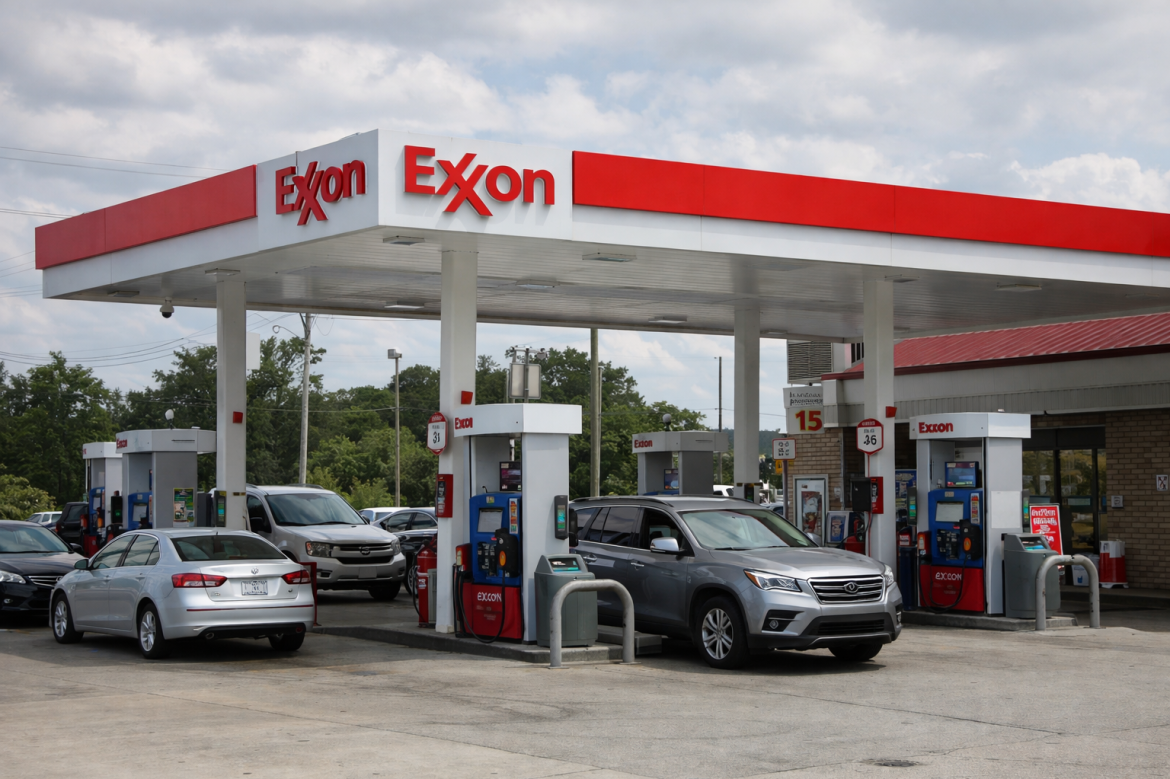
ExxonMobil stock slips as oil falls, but rally may not be over yet
Shares of ExxonMobil declined on Wednesday, tracking a pullback in crude prices as investor optimism grew that the conflict between the United States and Iran could ease in the coming weeks.
Despite the near-term pressure, the broader outlook for the energy giant remains supported by strong fundamentals and elevated oil prices.
The stock fell 4.7% on Wednesday, mirroring declines across the energy sector.
Peers, including Chevron and several other oil producers, also traded lower, as crude retreated following comments from Donald Trump suggesting a potential de-escalation of the conflict.
Oil price pullback weighs on energy stocks
Oil prices, which had surged above $100 per barrel amid supply disruptions and geopolitical tensions, slipped as markets began pricing in a possible end to the war.
The prospect of restored flows through the Strait of Hormuz—a route that previously handled about 20% of global oil and natural gas—has reduced fears of prolonged supply constraints.
The decline in crude prices has put pressure on energy equities, which had been among the strongest performers in recent months.
ExxonMobil shares, along with Chevron, had rallied sharply in the first quarter, gaining more than 40% and 30%, respectively, as oil prices surged.
That momentum now faces a potential reversal if geopolitical risks ease.
Investors are increasingly weighing whether the rally in oil stocks has peaked, particularly as the market reassesses the likelihood of sustained supply disruptions.
Strong fundamentals support longer-term outlook
Despite the recent pullback, ExxonMobil’s underlying business remains robust.
The company continues to benefit from its integrated model, spanning upstream exploration and production, midstream transportation, and downstream refining and distribution.
This diversification provides resilience across different pricing environments, enabling the company to generate profits even when crude prices fluctuate.
With breakeven levels below $50 per barrel, ExxonMobil is positioned to generate substantial free cash flow at current price levels.
The company’s balance sheet also remains strong, with more than $10 billion in cash and total assets significantly exceeding liabilities.
This financial strength has allowed ExxonMobil to return substantial capital to shareholders, including more than $37.2 billion in dividends and share buybacks last year.
Strategic investments have further strengthened its growth outlook.
The integration of Pioneer Natural Resources has expanded its footprint in the Permian Basin, while international projects in Guyana continue to boost production visibility.
LNG expansion and global supply dynamics in focus
ExxonMobil’s long-term growth strategy is also supported by its investments in liquefied natural gas.
The company, alongside QatarEnergy, has completed the first LNG train at the Golden Pass project in Texas, with a capacity of 6 million metric tons per annum.
The timing of the project is notable, as global LNG markets face disruptions linked to the Iran conflict.
Damage to infrastructure in Qatar and constraints on shipping through the Persian Gulf have tightened supply, enhancing the strategic importance of new capacity.
Looking ahead, ExxonMobil expects significant growth in earnings and cash flow through the end of the decade.
The company has projected $25 billion in annual earnings growth and $35 billion in additional cash flow by 2030, supported by high-return, low-cost projects.
While the near-term trajectory of ExxonMobil’s stock will likely remain tied to oil price movements and geopolitical developments, its strong operational base and long-term investment pipeline suggest that the broader rally in energy stocks may not be over.
The post ExxonMobil stock slips as oil falls, but rally may not be over yet appeared first on Invezz