
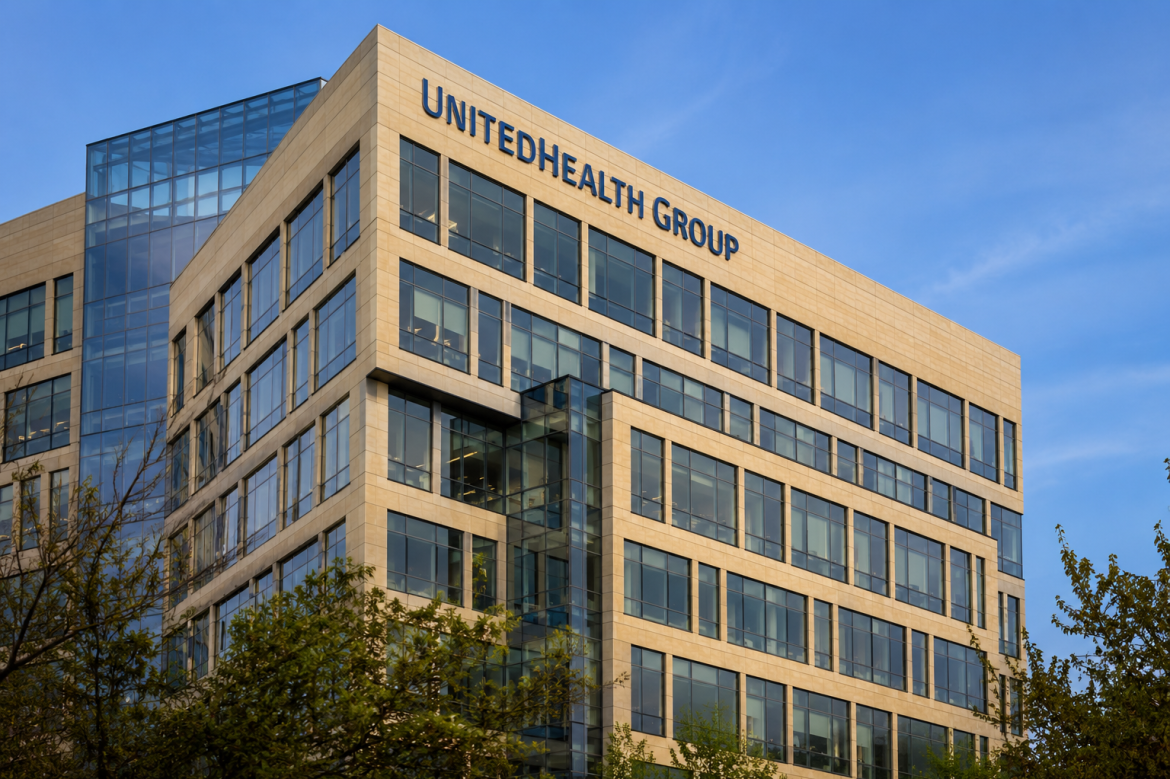
UnitedHealth slips after Berkshire exits stake even as analysts see rebound ahead
Shares of UnitedHealth Group (UNH) fell over 2% on Monday after Berkshire Hathaway disclosed that it had exited its entire position in the health insurer during the first quarter, ending a brief but closely watched investment.
The healthcare giant’s stock had recently staged a strong rebound, posting its seventh consecutive weekly gain after rising about 4% last week.
Berkshire’s latest regulatory filing, however, revealed that the conglomerate sold its full 5.04 million-share stake in UnitedHealth during the quarter ended March 31.
The holding had only been initiated in the second quarter of 2025, meaning Berkshire held the position for less than a year.
The filing marks one of the first major portfolio disclosures since Greg Abel officially became chief executive while Warren Buffett transitioned to the role of chairman.
Berkshire also exited investments in companies including Visa, Mastercard, Amazon, and Domino’s Pizza, while building a new stake worth roughly $2.65 billion in Delta Air Lines.
Healthcare pressures remain in focus
The Berkshire exit comes at a time when UnitedHealth continues to face several operational and regulatory challenges despite improving investor sentiment.
The company remains under pressure from a federal moratorium that blocks new Medicare enrollments for home healthcare providers, while also navigating a Department of Justice investigation into its billing practices.
At the same time, UnitedHealth is pursuing aggressive measures to protect margins, including plans to reduce its Medicare Advantage enrollment by around 1.3 million members.
Medicare Advantage, the federally subsidised insurance programme for seniors, accounts for roughly 40% of UnitedHealth’s total revenue and remains central to its long-term growth strategy.
The insurer struggled last year as rising medical costs and changes to government reimbursement models weighed heavily on profitability.
However, investor sentiment improved sharply last month after the company reported stronger-than-expected quarterly results that beat Wall Street estimates on both revenue and earnings.
The earnings report helped ease concerns that medical costs would continue to pressure margins and sent the stock up roughly 7% following the release.
Goldman sees recovery taking shape
Earlier this month, analysts at Goldman Sachs added UnitedHealth to the bank’s US Conviction List Director’s Cut, a closely followed selection of high-confidence investment ideas.
Goldman analyst Scott Fidel argued that UnitedHealth could be approaching a “sustained positive profit inflection” as pricing adjustments and cost controls begin improving profitability.
The bank noted that the company’s updated pricing for health coverage is now embedded, while healthcare costs are increasingly aligning with management expectations.
Although Fidel forecasts a 4% decline in Medicare Advantage revenue this year, he expects a sharp recovery in profitability, including a projected 50% increase in Medicare Advantage EBIT driven by pricing resets and cost efficiencies.
Artificial intelligence is also expected to play a growing role in reducing operating costs across UnitedHealth’s healthcare services business, particularly within Optum Health.
UnitedHealth plans to reduce membership in its value-based care Optum Health division by roughly 10% this year as part of broader restructuring efforts.
Goldman forecasts annual earnings-per-share growth averaging more than 15% through 2028.
“Bottom line, UNH represents a high conviction opportunity to own a best-in-class managed care franchise at the turning point of its earnings cycle,” the Goldman report said.
The bank added that “a durable, multi-year EPS recovery is emerging that is not yet fully appreciated by the market.”
Retail traders remain optimistic
Retail investors appeared largely unfazed by Berkshire’s decision to exit the stock.
Discussion around UnitedHealth surged on social media platform Stocktwits over the past week, with sentiment improving from bearish to neutral territory amid a more than 200% increase in message volume.
Some retail traders argued Berkshire may have exited before the strongest phase of the company’s recovery materialises as profitability stabilises and healthcare demand remains resilient.
The post UnitedHealth slips after Berkshire exits stake even as analysts see rebound ahead appeared first on Invezz