Archive

June 3, 2026

Browsing

  • The outflow on Friday added to the $1.55 billion that has been drained from the ETFs since May 14.
  • The majority of the $2.7 billion in net inflows to the US Bitcoin ETF market this year have originated from IBIT.

The US spot Bitcoin exchange-traded fund market is about to see net outflows for the year after six days of withdrawals that began on Friday. After Friday’s market loss of $105.2 million—$68.9 million for BlackRock’s iShares Bitcoin Trust (IBIT) and $36.3 million for Fidelity Wise Origin Bitcoin Fund (FBTC)—net inflows into Bitcoin ETFs for 2026 have decreased to $536 million.

Withdrawal Streak Shrinks 2026 Inflows

The outflow on Friday added to the $1.55 billion that has been drained from the ETFs since May 14, when the last net inflow was reported, even though no other Bitcoin ETF based in the US saw a change in flows.

It is possible to gauge the level of institutional interest in Bitcoin and the flow of new money into the cryptocurrency market by looking at the net inflows into US spot Bitcoin ETFs. The first quarter saw a 70% reduction in Bitcoin ETF holdings at institutional market maker Jane Street and a 10% reduction at investment bank Goldman Sachs.

The majority of the $2.7 billion in net inflows to the US Bitcoin ETF market this year have originated from IBIT, however the industry as a whole is still seeing net inflows for 2026.

While most of its rivals have seen a decline in 2026, its inflows this year are not expected to surpass the $25 billion it received in 2025. So far in 2026, there have been net outflows from US-based spot Ether ETFs, and new altcoin ETFs have failed to meet the same level of demand as their predecessors.

The Morgan Stanley Bitcoin Trust ETF (MSBT) is one encouraging trend; it debuted on April 8 and has received $264 million in net inflows so far.

Highlighted Crypto News Today:

VItalik Buterin Defends Long-Term Vision Amid Token Price Concerns

  • Despite almost $2 billion fleeing spot ETFs in the previous two weeks, analysts continued to retain a cautious stance on bitcoin.
  • Assuming stablecoin liquidity is strong and long-term investors exercise patience, Bitcoin can withstand a certain amount of institutional selling.

On Monday, Asian stock markets rose, which helped push Bitcoin up a little, thanks to a precipitous drop in oil prices. As of this writing, the top cryptocurrency by market cap was trading around $77,400, an increase of 0.43% over the last 24 hours, as reported by CMC.

There, bitcoin was trading over the $76,940 mark that represents its 50-day simple moving average, which is a widely followed market indicator. Breakouts above this crucial level are usually seen as positive by traders and chart experts, so they keep a tight eye on the market. Significant other cryptocurrencies also saw slight increases.

Ether (ETH) increased by 0.4%, while XRP and Solana (SOL) both increased by 0.6% or more. On the other hand, Bitcoin remained the only one of the three whose prices were trading above its 50-day moving average.

Following a precipitous decline from last Wednesday’s high of over $104 per barrel, futures linked to West Texas Intermediate crude oil fell over 5% to over $91 per barrel. In early trading, Asian shares soared, with the Nikkei gaining over 3%, the Nifty in India climbing over 1%, and the S&P/ASX 200 in Australia adding 0.4%.

Lingering ETF Outflow Concerns

Though the number of tankers allowed across the strait is still far lower than pre-war levels, the Iranian Revolutionary Guard Corps (IRGC) said last week that they had let more than 20 tankers through.

Secretary of State Marco Rubio of the United States recently said that negotiators from Washington and Tehran had “a pretty solid thing on the table” and that a resolution to the hostilities between the two nations may be accomplished by Monday.

Despite almost $2 billion fleeing spot ETFs in the previous two weeks, analysts continued to retain a cautious stance on bitcoin. Finding out whether ETF outflows slow down is the most important indication for crypto. Assuming stablecoin liquidity is strong and long-term investors exercise patience, Bitcoin can withstand a certain amount of institutional selling. Any rise would have a difficult time holding if ETF redemptions continued.

Highlighted Crypto News Today:

Investors Assess New Fed Chair Kevin Warsh’s Monetary Policy Direction

  • Consistent monthly increase since February indicates a change from accumulation to modest distribution, similar to the bad market of 2022.
  • The annual growth rate of balances for whale accounts containing 1,000 to 10,000 Bitcoin (BTC) has slowed to a negative trend, marking the fastest shrinkage this year.

On Thursday, Bitcoin (BTC) made its first move back over $72,500 in six weeks, leading to $342 million in liquidations for bullish leveraged bets. Investors are concerned that bears will maintain control ahead of the $9 billion monthly options expiration, even if there was a recovery bounce to $73,500.

With $3.4 billion in open interest for buys and $2.91 billion for puts, Deribit has a 70% market dominance for the May monthly options expiration. When Bitcoin fell below $78,000 on May 17, however, bulls were taken unawares.

Only $306 million worth of call options will be still in the money if Bitcoin remains below $74,000 as we approach Friday’s expiration. Put options with a strike price of $74,000 or above total $1.05 billion, providing a significant edge to pessimistic tactics.

Mounting Bearish Indications

As the holding structure continues to worsen across significant cohorts, CryptoQuant reports that more and more Bitcoin investors are seeing a reddening of their assets. A report released on Thursday by CryptoQuant said that the annual growth rate of balances for whale accounts containing 1,000 to 10,000 Bitcoin (BTC) has slowed to a negative trend, marking the fastest shrinkage this year.

Consistent monthly increase since February indicates a change from accumulation to modest distribution, similar to the bad market of 2022, it said. “Dolphins” in the Bitcoin market, who own 100 to 1,000 BTC and are mostly owned by exchange-traded funds and corporate treasuries, continue to increase each year, although at a far slower pace.

As the crypto bear market intensifies in response to growing geopolitical and macroeconomic challenges, the holding structure is deteriorating. The long-term holder supply hit a new high of 15.8 million BTC, according to CryptoQuant, but the bearish configuration indicates that new market entrants are not present.

Highlighted Crypto News Today:

Grayscale Reportedly Delays IPO Plans Amid Weak Crypto Market Conditions

  • A mystery trader sold 29.2 million shares of BlackRock’s IBIT on Tuesday using dark pool.
  • The net outflow of $333.6 million occurred on the same trading day as the huge IBIT deal, continuing a streak of 11 trading days for US-listed Bitcoin ETFs.

Financial services firm NYDIG’s head of research, Greg Cipolaro, speculates that last week’s $1.26 billion block transaction in BlackRock’s iShares Bitcoin Trust (IBIT) was probably a whale quickly getting out of a directional move.

A mystery trader sold 29.2 million shares of BlackRock’s IBIT on Tuesday using dark pool, a private trading platform where institutions may covertly conduct big deals outside of public markets. This sparked suspicion over the motives and identities of the seller.

Several signs were “consistent with a large directional holder exiting a concentrated position rather than a contemporaneous basis-trade unwind,” according to a research note by Cipolaro. According to him, a big directional holding was likely selling since the seller accepted the offer for $1.01 less than the market price of $44.17, forewent $29.5 million to guarantee instant execution, and used a private trading platform.

Bitcoin ETF Outflows Continue

Major deals have the power to shift markets and influence public opinion. But in this instance, Bitcoin’s (BTC) value fell 2.8% on the trading day after the deal. Eric Balchunas, an ETF analyst for Bloomberg, said at the time that, despite the large block sell, the market took the sale very well.

The net outflow of $333.6 million occurred on the same trading day as the huge IBIT deal, continuing a streak of 11 trading days for US-listed Bitcoin ETFs, according to data from Farside Investors.

Since the last net inflow was observed across numerous funds on May 14, more than $2.9 billion has been pulled out of the ETFs. At the same time, public opinion has been all over the place. On Monday, the crypto market’s “fear” index—which gauges general opinion about cryptocurrencies—returned a score of 29 out of 100. For the month of May, it likewise averaged a “fear” rating.

Highlighted Crypto News Today:

JPMorgan CEO Slams Coinbase, Warns of Stablecoin Risks in Clarity Act

  • According to data source SoSoValue, investors pulled $3.45 billion over 11 trading sessions as bitcoin plummeted under $70,000 from US spot bitcoin ETFs.
  • This shift occurs at the same time when other indicators of institutional demand are showing signs of weakness.

After Monday’s admission of a minor BTC sale by Strategy (MSTR), the crypto markets continued to hemorrhage downward, with bitcoin (BTC) leading the pack.

Bitcoin was trading around $69,000 an hour before U.S. stock markets opened on Tuesday morning, reflecting a 4.5% decline over the previous 24 hours. Although the $60,000 low on February 6 was brief, there was a wick to the downside. The $63,000 level is likely to be the point at which markets begin to contemplate a “re-test” of the bottom.

Longest Redemption Streak

According to data source SoSoValue, investors pulled $3.45 billion over 11 trading sessions as bitcoin plummeted under $70,000 from US spot bitcoin ETFs, the longest withdrawal run on record. The record-breaking 11-session streak started on May 15, exceeding the eight-day record established in February 2025 and making it the longest stretch of net redemptions since the funds’ introduction in January 2024.

Stocks related to semiconductors and artificial intelligence continue to pique investors’ curiosity, and Wall Street’s penchant for risk is evident with Nvidia’s 6% gain. In the most recent session, investors pulled $484 million out of the funds, contributing to a 4% decline in the price of Bitcoin throughout the Asian trading day.

Although the transaction only accounted for a small portion of Strategy’s holdings, it was the first time the business had sold bitcoin since December 2022 and after months of buy-and-hold advocacy by Executive Chairman Michael Saylor.

This shift occurs at the same time when other indicators of institutional demand are showing signs of weakness. A growing number of people are opting to store bitcoin rather than purchase it, according to CryptoQuant’s most recent weekly analysis.

A further indicator that one of the main demand drivers supporting bitcoin’s surge may be dwindling is the present record ETF withdrawal streak, as pointed out by CryptoQuant, which follows a significant slowdown in ETF and corporate treasury accumulation in recent months.

Highlighted Crypto News Today:

Binance Unveils U.S. Stock Trading, Expands Push Into Tokenized Equities

France has maintained its position as Europe’s leading destination for foreign direct investment projects, according to the latest EY Europe Attractiveness Survey. 

The country attracted 852 new investment projects in 2025, far ahead of its closest rivals, even as the overall number of projects across Europe fell to the lowest level in 11 years, the survey was quoted in a Euronews report.

Foreign investment is widely regarded as a vital driver of economic growth, innovation, and job creation. 

Governments across the continent are competing aggressively with incentives, tax breaks, and high-profile summits to lure international companies.

France strengthens lead with Choose France initiative

President Emmanuel Macron’s “Choose France” campaign, launched in 2018, continues to deliver results. At this year’s summit, Macron announced that foreign companies had pledged investments worth a record €93 billion.

Despite a 17% drop in new projects to 852 in 2025, France comfortably retained the top spot. The country has successfully positioned itself as a stable and attractive hub for international investors.

Source: Euronews

UK and Germany follow as investment slows across Europe

The United Kingdom ranked second with 730 projects in 2025, down 14% from the previous year. Germany placed third with 548 projects, a 10% decline and its lowest level since 2009.

The long-term trend for Germany is particularly concerning. Compared to 2019, the number of foreign investment projects has plunged 44%, a steeper fall than in France (-28%) or the UK (-34%).

Europe as a whole recorded 5,026 new investment projects in 2025, down 7% from 2024.

This marked the lowest annual total in 11 years, reflecting broader economic uncertainties, geopolitical tensions, and slower global growth.

Why France continues to win

Analysts attribute France’s resilience to proactive government policies, improved business environment reforms, and its central position in the European Union.

The “Choose France” initiative has helped the country stand out by offering tailored incentives and high-level engagement with investors.

In contrast, Germany continues to face challenges, including high energy costs, regulatory complexity, and weaker domestic demand, which appear to be deterring some foreign investors.

The UK has benefited from post-Brexit flexibility in certain sectors but continues to face headwinds from labour shortages and trade frictions.

Broader implications for European competitiveness

The EY survey tracks actual announced investment projects rather than capital flows, providing a clearer picture of real economic activity on the ground. 

These projects typically involve new factories, research centres, and expansions that create direct jobs and strengthen supply chains.

The overall decline in projects across Europe signals growing challenges in attracting foreign capital at a time when many economies are seeking to boost growth and innovation.

Competition from the United States, Asia, and emerging markets remains intense.

Outlook for 2026

With global economic conditions still uncertain, European nations are expected to intensify their efforts to attract foreign investment. 

France appears well-positioned to defend its lead, while the UK and Germany will need to address structural issues to regain momentum.

As governments prepare new incentives and policy measures, the battle for foreign investment projects is likely to heat up further in 2026. 

Success in this area could prove decisive for Europe’s economic recovery and long-term competitiveness. 

The post France beats UK and Germany to remain Europe’s top FDI destination appeared first on Invezz

The US Dollar held its ground on Wednesday as investors assessed escalating tensions in the Middle East while preparing for a series of key economic releases from the United States later in the day.

Market participants are closely watching the release of the ADP Employment Change report, the ISM Services Purchasing Managers Index (PMI) for May, and April Factory Orders data.

In addition, the Federal Reserve is scheduled to publish its Beige Book, which provides an overview of economic conditions across the country.

Geopolitical developments support safe-haven demand

Investor sentiment remained influenced by developments in the Middle East.

According to the United States military’s Central Command, US forces launched self-defence strikes on Iran’s Qeshm Island and defeated multiple Iranian missiles and drones in response to Iranian drone attacks targeting US forces in Kuwait.

Separately, reports indicated that Iran launched three missiles toward Bahrain.

The missiles were intercepted by US and Bahraini air defence systems.

The escalation in regional tensions helped support demand for the US Dollar, traditionally viewed as a safe-haven asset during periods of geopolitical uncertainty.

Strong JOLTS data boosts the dollar

Economic data released on Tuesday also contributed to the Dollar’s resilience.

US Job Openings and Labor Turnover Survey (JOLTS) data showed that job openings rose sharply to 7.6 million in April, up from 6.88 million in March.

The figure significantly exceeded market expectations, which had also been set at 6.88 million.

The stronger-than-expected reading suggested continued strength in the US labour market and provided additional support for the US currency.

The US Dollar Index continued to edge higher after recording modest gains in the previous session.

By Wednesday, the index was up 0.15% on the day at 99.35.

Meanwhile, US equity index futures traded lower, declining between 0.1% and 0.2%.

Energy markets also reflected the heightened geopolitical concerns, with West Texas Intermediate crude oil rising about 2% on the day to trade above $93.50 per barrel.

Australian Dollar weakens after GDP miss

In the Asia-Pacific region, the Australian Bureau of Statistics reported that the country’s Gross Domestic Product expanded by 0.3% on a quarterly basis during the first quarter.

The result followed growth of 0.9% in the final quarter of 2025 and came in below analysts’ expectations of 0.5%.

Following the release, the Australian Dollar remained under pressure.

AUD/USD traded near 0.7150 in early Wednesday trading, down approximately 0.4% on the day.

Euro and Pound lose ground

The Euro also faced pressure against the stronger US Dollar.

EUR/USD remained on the defensive and moved toward the 1.1600 level during the European morning after ending Tuesday’s session virtually unchanged.

The British Pound showed relative resilience on Tuesday, posting marginal gains despite broader Dollar strength.

However, GBP/USD edged lower in early European trading and slipped below 1.3450.

Japanese authorities signal readiness to intervene

In Japan, Finance Minister Satsuki Katayama stated on Wednesday that authorities are prepared to act in foreign exchange markets if necessary.

Despite the warning, USD/JPY climbed to its highest level since April 30, the date of the Japanese government’s previous market intervention, and traded near the 160.00 mark.

Gold moves lower

Gold prices struggled to gain momentum after ending Tuesday’s session largely unchanged.

On Wednesday, XAU/USD turned lower and declined toward $4,450, as the stronger US Dollar weighed on the precious metal despite ongoing geopolitical uncertainty.

With geopolitical risks rising and several major US economic reports due later in the day, investors remain focused on developments that could influence market sentiment and the near-term direction of the Dollar.

The post US dollar resilient as traders brace for key economic updates appeared first on Invezz

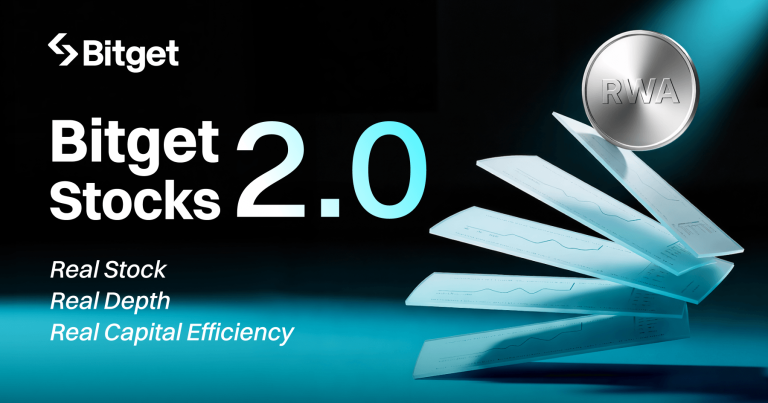
Bitget has announced the launch of Bitget Stocks 2.0, an upgraded tokenized stock spot product designed to improve liquidity, asset transparency, and capital efficiency for tokenized equity trading.

The product is issued by Reality, a licensed RWA issuance platform, powered by Bitget’s strategic support, trading access, and asset security within its ecosystem.

The upgrade is built around three product improvements: deeper stock market liquidity, 1:1 economic mapping of the underlying stock asset, and broader use of stock tokens within Bitget’s margin, strategy, and yield ecosystem.

Stock 2.0 is designed to connect tokenized stock trading with real equity market liquidity from global channels.

This gives users a stock spot trading experience with deeper order books, lower trading friction, and faster execution directly inside the Bitget app.

The product also supports 1:1 asset mapping for eligible stock tokens. With direct stablecoin trading using USDT.

Cash dividends are also converted into USDT and credited to users’ accounts.

Stock dividends are reflected in user balances, while corporate actions such as stock splits and reverse splits are mapped to token positions to keep economic exposure aligned with the underlying stock.

Stock 2.0 also expands the role of tokenized equities inside Bitget’s ecosystem.

Eligible stock tokens can be used within unified account and margin systems, and can be connected to supported tools such as spot grid, futures grid, copy trading, and selected yield products.

This gives users more ways to manage capital while maintaining exposure to worldwide equity assets.

“Tokenized equities are the bridge crypto is building between global markets,” said Gracy Chen, CEO at Bitget.

“By 2030, we could see over 10% of global financial assets to be tokenized, which will be fueled by platforms built by access, depth, and compliance. As of today, we have successfully shipped the requirements being built for that future.”

As compared to existing RWA products on other platforms, Bitget offers the most competitive fees in the market.

The base rate is 0.1%, while the Maker/Taker fees are the same as VIP, a fixed fee of 0.05% with BGB offers and zero friction costs, making it the most cost-effective route to trade stocks. 

The launch builds on Bitget’s early lead in tokenized equity trading, from tokenized stocks and ETFs to stock futures, and pre-IPO. 

Bitget ranks among the first major crypto exchanges to support tokenized equities.

In January 2026, the platform’s cumulative tokenized stock spot volume had surpassed $1 billion, while it accounted for approximately 89% of Ondo-issued tokenized stock trading volume in December 2025.

Its stock futures also crossed $10 billion in cumulative trading volume, making it a pioneer in the Universal Exchange model.

The first batch of Bitget Stocks 2.0 includes 36 newly listed stock-linked assets, covering major equities and ETFs such as Apple, Amazon, Meta, Tesla, Alphabet, NVIDIA, Microsoft, and QQQ. Availability is subject to user jurisdiction and applicable eligibility requirements.

The post Bitget rolls out Stocks 2.0, linking tokenized equities to real US market liquidity appeared first on Invezz

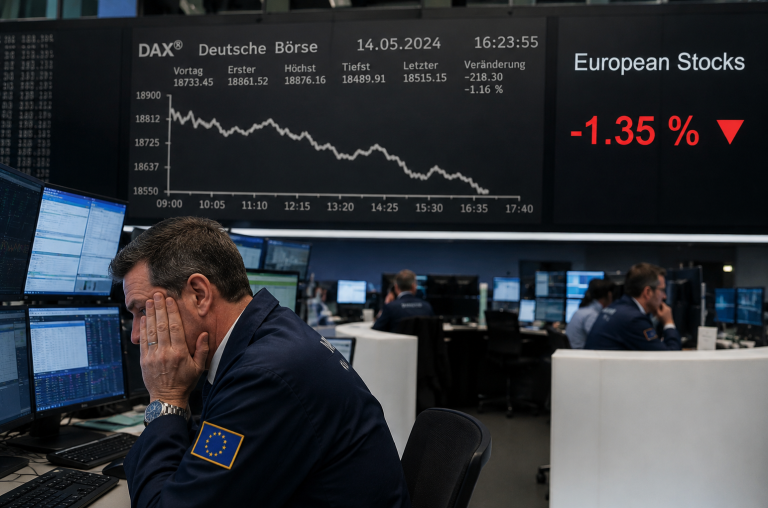
European shares edged lower on Wednesday as escalating tensions in the Middle East drove oil prices higher and weighed on investor sentiment.

Concerns over the potential impact of the conflict on global markets offset gains in the retail sector, where Zara owner Inditex rose sharply following a positive trading update.

The pan-European STOXX 600 index fell 0.1% to 624.32 points by 0805 GMT.

Market sentiment remained cautious as investors monitored developments in the Middle East and their implications for energy markets.

Middle East developments support Oil prices

Investor attention remained focused on geopolitical developments after tensions in the Middle East intensified.

The US military said it had thwarted Iranian missile attacks targeting Bahrain, Kuwait, and other locations in the region.

The escalation in hostilities pushed Brent crude prices approximately 2% higher.

Rising oil prices often increase concerns about inflationary pressures and higher operating costs for businesses, particularly in sectors that are heavily dependent on fuel.

Despite the heightened tensions, losses across European equity markets remained limited.

Investor sentiment found some support after US President Donald Trump said that talks with Iran were continuing.

His comments helped ease concerns that the conflict could escalate further in the near term.

Airlines and automakers lead declines

Higher oil prices weighed on sectors that are particularly sensitive to energy costs.

Airline stocks came under pressure as investors assessed the impact of rising fuel expenses on profitability.

Shares of Lufthansa fell around 1%, while Air France also declined by roughly 1%.

The automotive sector recorded the steepest decline among major European industry groups.

The sector index dropped 1.2%, reflecting broader concerns about the economic impact of higher energy prices and increased market uncertainty.

The weakness in airline and automotive shares contributed to the overall decline in the STOXX 600 index, although losses remained relatively modest.

Inditex boosts the retail sector

In contrast to the broader market weakness, retail stocks outperformed after a strong update from Inditex, the Spanish fashion retailer that owns the Zara brand.

Shares of Inditex jumped nearly 5% after the company reported a strong start to summer trading.

The update was welcomed by investors and helped lift sentiment across the retail sector.

The broader European retail index climbed 2%, making it the strongest-performing sector of the session.

Gains in retail stocks helped offset some of the pressure from energy-sensitive industries and prevented a deeper decline in the wider market.

Market focus remains on geopolitical risks

European markets continued to balance the impact of geopolitical uncertainty against signs of resilience in selected sectors.

Rising oil prices and concerns surrounding developments in the Middle East remained key factors influencing investor sentiment.

While defensive positioning persisted in parts of the market, strong performances from retail stocks, led by Inditex, provided support.

Investors are expected to remain focused on further developments in the region, as well as any signals regarding ongoing discussions between the United States and Iran.

The post STOXX 600 edges lower as rising oil prices weigh on markets appeared first on Invezz

Nvidia’s latest Computex appearance gave Wall Street another reason to stay bullish on the world’s most valuable chipmaker.

Chief Executive Jensen Huang used the Taipei stage to push Nvidia (NASDAQ: NVDA) deeper into personal computers, datacentres and full-scale machine-learning infrastructure.

Goldman Sachs analyst James Schneider was watching closely.

After the keynote, he reiterated a Buy rating and a $285 price target, saying the stock still has a “positive catalyst path ahead” into 2027 and beyond.

Nvidia stock slipped 0.69% on Tuesday, though the stock remains up about 18% year to date, reflecting continued investor confidence in the company’s AI-driven growth story.

From AI chips to your PC: Nvidia’s boldest bet yet

The most eye-catching part of Nvidia’s Computex update was its move into the premium PC chip market.

Nvidia unveiled RTX Spark, a platform aimed at bringing more powerful local computing to laptops and desktops.

For everyday users, that matters because more advanced tools could run directly on a machine rather than depending entirely on the cloud.

For investors, it matters because it gives Nvidia a chance to expand beyond the data centre cycle that has driven most of its recent growth.

Schneider said Nvidia’s push with Microsoft could help accelerate adoption of Windows on ARM, a market that has struggled to gain real traction despite years of industry effort.

Nvidia has long been best known for graphics processors and data centre accelerators.

A serious PC push puts it closer to Intel, AMD, Qualcomm and Apple in a market where premium devices still command strong margins.

Hyperscalers are spending big

The bigger driver is still cloud spending.

Hyperscalers, the large cloud operators such as Amazon, Google and Microsoft are pouring money into datacentres, networking gear and accelerated computing systems.

That spending is central to Goldman’s Nvidia thesis.

Schneider’s key point is that greater visibility into 2027 capital expenditure plans could be the next major catalyst for the stock.

Nvidia’s Vera Rubin platform is also central to that argument. Huang said Vera Rubin is ramping into full production, with systems built around NVL72 racks, Vera CPUs and a broader “AI factory” stack.

In simple terms, Nvidia is not just selling individual chips. It is selling more of the full system that cloud providers need to train and run advanced models at scale.

That full-stack position is what Goldman sees as Nvidia’s moat.

Schneider highlighted the company’s data centre performance and cost leadership as a key advantage against rivals.

For large customers, the cheapest chip is not always the best option as power use, speed, networking, software and deployment time all affect the economics.

Nvidia stock: What the numbers say

Goldman’s $285 target is bullish, but it is not the highest number on the Street.

The broader analyst consensus sits near $310, with a Strong Buy rating based on 38 Buy calls, one Hold and one Sell.

Goldman’s estimates are also well above consensus, with earlier reports showing its 2027 forecasts running 34% ahead of Wall Street expectations.

That gap is important as it suggests Goldman sees more earnings power in Nvidia’s next product cycle than the market has fully priced in.

None of this removes the risk of a pullback, as Nvidia’s valuation still depends on very high growth continuing.

But Goldman is not alone in seeing further upside. The next few months may show whether the rally is running out of steam or whether Nvidia’s next leg is only beginning.

The post What's next for Nvidia stock? Goldman Sachs points to major growth driver appeared first on Invezz